
Senior Dog Grooming: How to Keep Your Older Dog Comfortable, Clean, and Happy
By Jenny Meharg6 min read
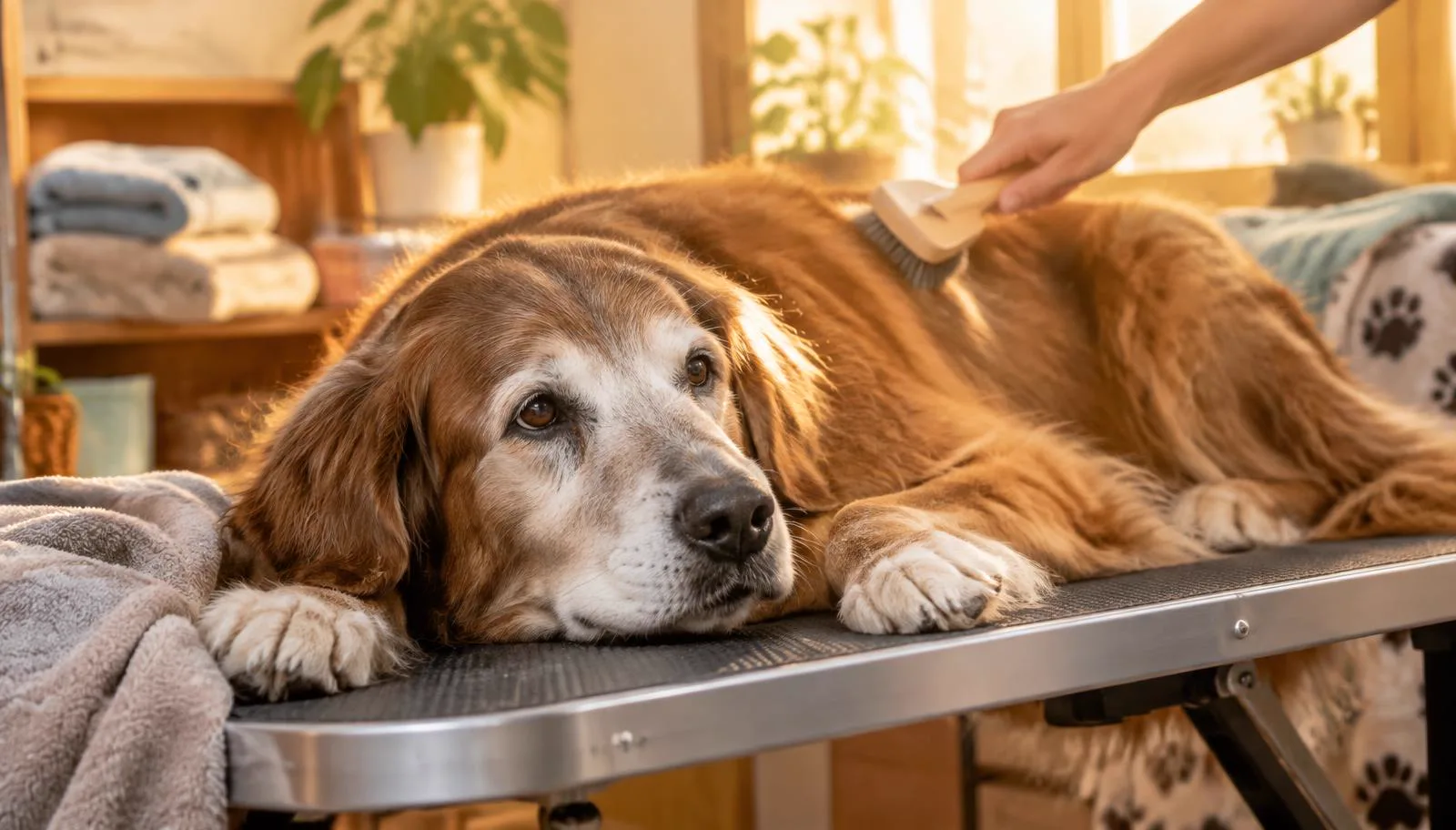
The gray muzzle. The slower walk to the door. The longer naps in the sunny spot. Watching a dog grow older is one of the most bittersweet parts of sharing life with them, and it often comes with a question owners do not always think to ask: does my dog's grooming need to change, too?
The answer is usually yes. Older dogs still need regular grooming, and in many ways it matters even more as they age. But the way grooming is done should shift to match their bodies. Stiff joints, thinner skin, and a little less patience all call for a gentler, slower approach.
At Jenny's House of Paws in Dearborn, Michigan, senior dogs are welcome for every service. Owner Jenny Meharg has spent eight years grooming dogs and cats one-on-one, and this guide shares what changes as dogs age, what to watch for, and how to keep grooming comfortable in the golden years.
When Is a Dog Considered a Senior?
There is no single birthday that makes a dog a senior. According to the American Animal Hospital Association (AAHA), the term is generally applied to dogs in the last 25 percent of their estimated life span. Size plays a big role. AAHA notes that smaller breeds generally live longer and may not be considered seniors until around 12 years old, while a large dog can reach senior status as early as 7 to 8 years old.
In other words, your 8-year-old Great Dane and your 8-year-old shih tzu may be at very different stages of life, and their grooming needs can be different too.
How Aging Changes Your Dog's Grooming Needs
Joints and Mobility
AAHA lists arthritis among the health conditions aging pets are more prone to. For grooming, that matters a lot. Standing for a long time, having legs lifted for nail trims, or holding a position for a haircut can be uncomfortable for a dog with sore hips, knees, or shoulders.
Stiffness also makes it harder for older dogs to keep themselves clean, especially around the rear end and paws, which is one more reason regular grooming helps.
Coat Changes
Many owners notice their senior dog's coat changing texture over time. It may become thinner in places, drier, or coarser. Some coats become more prone to tangling as dogs move less and spend more time lying down, since friction against bedding and the floor encourages mats. If your older dog has a curly or long coat, our guide on matted dog hair explains how to keep tangles from building up.
Skin and Lumps
Older dogs commonly develop lumps, bumps, and other skin changes. Preventive Vet notes that while many lumps are harmless fatty growths, some can be cysts, abscesses, or more serious growths, so every new lump should be checked by a veterinarian.
Grooming is a natural time to notice these changes. Brushing and bathing mean hands on every part of the body, which makes it easier to spot something new. Jenny is a groomer, not a veterinarian, but if she notices a possible skin, ear, or nail problem, she will let you know so you can check with your vet.
Nails
Senior dogs often walk less, and on softer surfaces, so their nails may not wear down the way they used to. Longer nails change how a dog stands and walks, which is the last thing a dog with stiff joints needs. Keeping nails at a comfortable length supports better footing and posture. Our post on why regular nail trims matter covers what “too long” looks like.
Senses and Patience
AAHA notes that senior pets may lose some of their vision, hearing, and sense of smell. A dog who cannot hear well may be startled by a touch they did not see coming. A dog who cannot see as well may feel uneasy in an unfamiliar room. Older dogs may also tire faster, which means long grooming sessions can feel like a lot.
Senior Dog Grooming Tips for Home
A little at-home care between appointments keeps your older dog comfortable and makes professional grooms shorter and easier.
- 1. Brush in short, gentle sessions. A few minutes at a time is plenty. Let your dog lie down if standing is hard, and use a soft touch over bony areas.
- 2. Give a warning touch. If your dog's hearing or vision is fading, let them sniff your hand or rest your hand gently on their back before you start, so they are not startled.
- 3. Keep the rear and feet tidy. Gently wipe the rear end and paws after walks, especially if your dog has trouble reaching these areas. Michigan winters make this even more important. See our guide to winter paw care and road salt.
- 4. Do a weekly lump check. While you brush, run your hands over your dog's body and note anything new. A simple note on your phone with the date and location makes it easier to tell your vet if something changes.
- 5. Check the ears. Wipe the visible part of the ear gently. Odor, redness, discharge, or head shaking are signs to call your vet. Our ear cleaning guide explains more.
- 6. Use non-slip footing. A towel or bath mat in the tub or on a smooth floor helps an older dog feel steady during baths and brushing at home.
- 7. Keep up with vet visits. AAHA notes that senior pets need more frequent veterinary care. Mention any grooming-related changes, like new lumps or sore spots, at those visits.
What to Look for in a Groomer for Your Senior Dog
As your dog ages, comfort should come before style. When choosing a groomer for an older dog, look for:
- A calm, quiet setting with fewer distractions and less noise
- A groomer who asks about health concerns, like joint pain or a sore spot, before the appointment
- Willingness to slow down and take breaks when your dog needs to rest
- Flexibility on services, so you can book a shorter visit when a full groom is too much
- Honesty, including recommending a vet check when something looks off
How Jenny's House of Paws Grooms Senior Dogs
Jenny's home-based studio in Dearborn was built around the idea that many pets do better away from busy salons with loud dryers and lots of animals. For senior dogs, that quieter setting can make a big difference.
- One-on-one, unhurried visits. Your dog is Jenny's only focus during the appointment, so there is time to go slowly.
- Health notes up front. When you book, mention anything Jenny should know, such as a sore hip, arthritis, vision or hearing loss, or a spot your dog does not like touched. She will start gently with that in mind.
- Breaks when needed. Jenny can slow the pace and pause as needed, and dogs who dislike having their feet held can be accommodated.
- The same groomer every time. Familiarity is comforting for older dogs. Jenny handles every visit herself, so she knows your dog's preferences and how their needs are changing over time.
- Comfort over looks. As Jenny puts it, a haircut that looks lovely and felt awful is not a success.
Services That Suit Older Dogs
Not every senior needs a full groom every time. Jenny's services can be booked individually or combined:
- Full-service grooming: bath, drying, haircut shaping, nail clipping, and ear cleaning in one visit, with seniors welcome
- Baths: a wash, rinse, and full dry with shampoo suited to the coat, with focus on the paws, belly, and rear
- Nail clipping: can be booked on its own for a short visit, including dewclaw checks
- Haircuts and breed trims: a shorter, easier-to-maintain cut can make life simpler for an older dog and their owner
- Spa packages: add a gentle facial, coat-matched shampoo, and paw lotion for a softer finish
If your older dog's skin looks red, broken, or painful, Jenny will pause and recommend a vet check before a cosmetic bath.
Senior Cats Welcome Too
Older cats sometimes stop grooming themselves as well as they used to, especially long-haired cats. Jenny welcomes senior cats who need a little help with brushing, nails, and a sanitary tidy. Learn the signs in our post, Does My Cat Need Professional Grooming?
Common questions
How often should a senior dog be groomed?
It depends on the coat, but many older dogs do best with regular, shorter visits rather than long sessions spaced far apart. Our guide on how often to bathe and groom your dog is a good starting point, and Jenny can suggest a schedule that fits your dog.
Can a dog with arthritis be groomed?
Yes, with a gentle approach. Let Jenny know about your dog's arthritis or joint pain when you book so she can plan for breaks and comfortable positioning. If your veterinarian has advice on handling or comfort for grooming days, share that too.
My groomer found a lump. What should I do?
Schedule a visit with your veterinarian. Many lumps in older dogs are harmless, but only a vet can tell for sure, and new lumps should always be checked.
Is a full groom too much for my older dog?
Sometimes. A shorter visit, such as a bath or a nail trim on its own, can keep your dog clean and comfortable without wearing them out. Jenny is happy to talk through options.
Your dog has spent years taking care of you. Gentle, comfortable grooming is one way to return the favor. Jenny's House of Paws offers quiet, home-based, one-on-one grooming for dogs and cats in Dearborn and nearby areas. There is no flat price menu. Share your dog's breed, size, coat condition, and any health or handling notes, and Jenny will reply within 24 hours with a quote and a suggested time. Call (313) 438-3634 or use the online booking form. The form does not charge a card.
Keep reading
October 2, 2026
Winter Paw Care: How to Protect Your Dog's Paws from Road Salt and Ice
Michigan winters bring salt, slush, and ice. Here is how to keep your dog's paws clean, comfortable, and protected all season long.
October 2, 2026
Your Puppy's First Grooming Appointment: How to Prepare and What to Expect
A puppy's first groom sets the tone for every visit after it. Here is how to prepare your puppy at home and what to expect on the day.
October 2, 2026
Does My Cat Need Professional Grooming? Signs Your Cat Could Use Some Help
Cats are great self-groomers, but long coats, mats, and older age can make it harder. Here are the signs your cat could use a little help.
March 18, 2026
How Often Should You Bathe and Groom Your Dog? A Guide for Dearborn Pet Owners
Bath timing depends on the coat, not the calendar alone. Here is a practical guide to baths, haircuts, and the signs your dog is ready for a groom.
June 10, 2026
Why Regular Nail Trims Matter for Your Dog's Comfort and Health
Overgrown nails change how a dog stands and walks. Here is how often to trim them, what “too long” looks like, and how a quieter visit helps nervous dogs.
August 26, 2026
Dog Ear Cleaning 101: What Every Pet Owner Should Know
Ear cleaning keeps wax and hair from building up. Learn which dogs need it more, how often to do it, and which signs belong at the vet instead of the grooming table.
November 4, 2026
Matted Dog Hair: What Causes It, Why It Hurts, and How to Prevent It Between Grooms
Mats form in the places you can't see and pull on your dog's skin. Here is what causes them, where to check, and how to brush so they don't come back.
November 4, 2026
Anxious Dog Grooming: How to Make Grooming Less Stressful for Nervous Dogs
Shaking, hiding, or pulling away at the groomer? Here is how to spot grooming stress, prepare at home, and find a calmer way to keep your dog groomed.