
Matted Dog Hair: What Causes It, Why It Hurts, and How to Prevent It Between Grooms
By Jenny Meharg6 min read
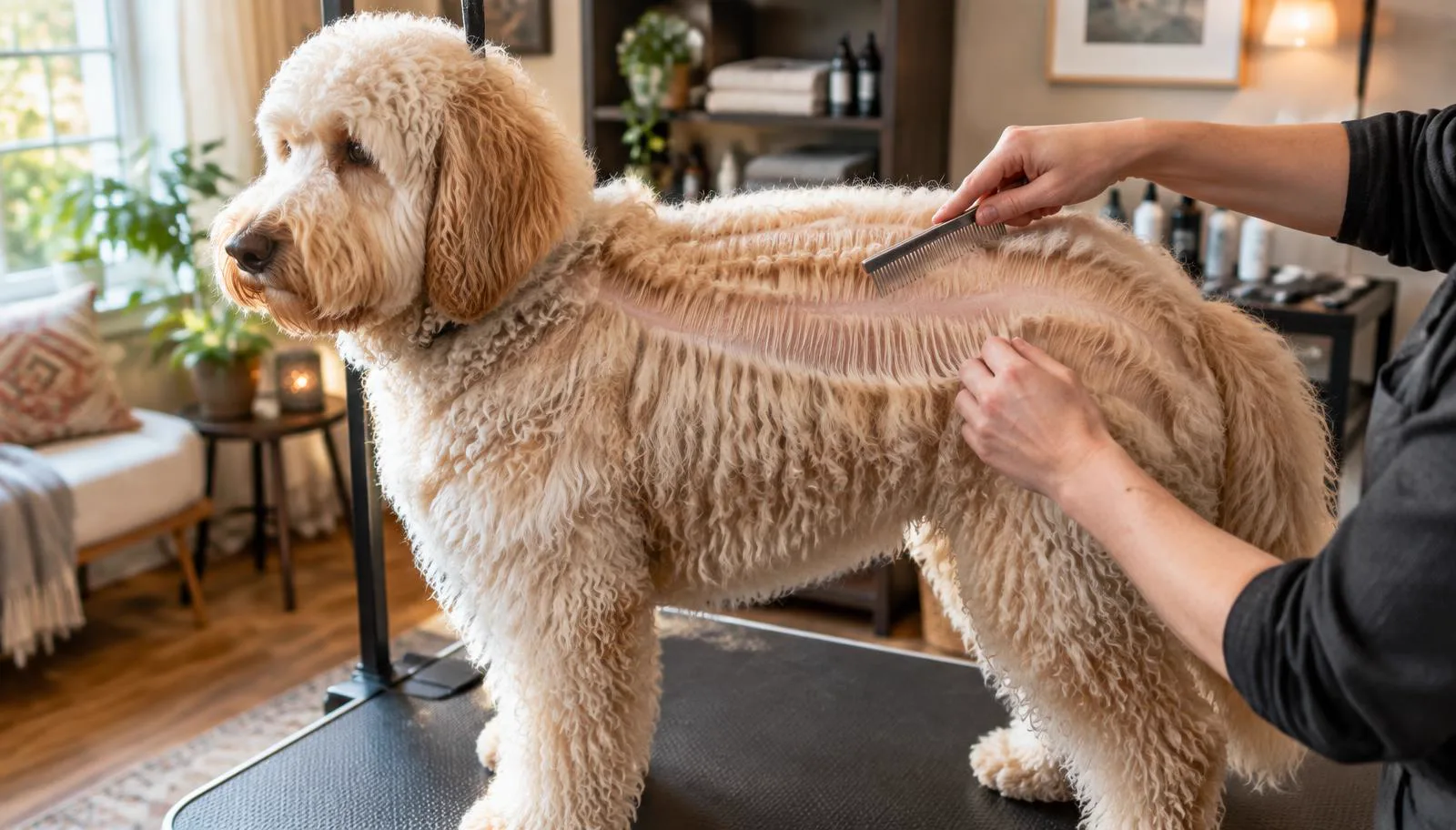
You run your hand over your dog's back and everything feels soft and fluffy. Then you reach behind the ears, under the collar, or into the armpit and find a tight, felt-like clump that will not budge. That is a mat, and where there is one, there are usually more hiding close to the skin.
Matted dog hair is one of the most common coat problems we see, especially in curly, wavy, and long-coated dogs. It is also one of the most misunderstood. Many owners think of mats as a cosmetic issue, something that makes a dog look scruffy. In reality, mats can be uncomfortable or even painful, and they are much easier to prevent than to fix.
At Jenny's House of Paws in Dearborn, Michigan, owner Jenny Meharg has spent eight years grooming dogs and cats one-on-one. This guide shares what causes mats, where they hide, and the simple at-home habits that keep your dog's coat comfortable between visits.
What Is a Mat, Exactly?
A mat forms when loose hair gets caught in the growing coat and twists around itself. Left alone, that small tangle collects more loose hair, dirt, and moisture, and tightens into a dense clump that sits right against the skin. When matting covers a large area and lies tight to the body, groomers call it pelting.
The tricky part is that mats usually start underneath. A dog can look brushed on the surface while the coat closest to the skin is knotting together.
Why Matted Dog Hair Is More Than a Bad Hair Day
Mats pull on the skin. Every time your dog walks, sits, or lies down, a tight mat tugs, which is why a matted dog may flinch when touched or resist being petted in certain spots.
According to PetMD, mats also trap moisture and debris against the skin, which can lead to irritation or infection. The ASPCA notes that even mild mats can cause skin irritation that develops into infected sores, that fleas and ticks can hide inside them, and that severe mats around the hind end can trap waste. In the most extreme cases, very tight mats can restrict blood flow to a limb.
The good news: regular brushing and routine grooming keep the vast majority of dogs from ever getting there.
Which Dogs Mat the Most?
Any dog with longer hair can mat, but some coats are far more prone to it:
- Curly and wavy coats: doodles, poodles, and poodle mixes
- Drop coats and long coats: shih tzus and similar breeds
- Wiry coats: schnauzers, especially on the legs and beard
- Double coats: when loose undercoat is not brushed out, it can pack down and tangle
- Senior dogs: older dogs may be less comfortable with long brushing sessions, so tangles can build up faster
If your dog is a doodle, you are in the highest-risk group. Their soft, fluffy coats are beautiful, but they tangle easily and mat quickly when they get wet.
What Causes Mats?
Most mats come from a combination of a few everyday factors:
- Friction. Anywhere the coat rubs — against a collar, a harness, a sweater, the floor, or the dog's own legs — hair twists together.
- Moisture. Baths, rain, swimming, and licking all make hair more likely to tangle as it dries. A coat that is not fully dried and brushed out after getting wet is a prime candidate for mats.
- Shedding. Loose hair that does not fall out gets caught in the coat around it.
- Surface-only brushing. This one surprises people. Brushing only the top layer can actually push loose hair and tangles down closer to the skin, where they tighten into mats.
- Time between grooms. The longer a coat grows without a trim, the more length there is to tangle.
A Note for Michigan Dog Owners
Dearborn winters are hard on coats. Snow, slush, and wet walks mean a damp coat for weeks at a time, and winter sweaters and harnesses add friction right where mats like to form. If your dog comes in wet, towel them off and let the coat dry completely before brushing out the legs, belly, and chest. For keeping feet clean and comfortable this season, see our guide to winter paw care and road salt.
Where Mats Hide: Check These Spots Weekly
Mats rarely show up in the middle of the back. Check these high-friction areas first:
- Behind and under the ears
- Under the collar and around the harness straps
- Armpits and the inside of the front legs
- The belly and groin
- Between the toes and around the paw pads
- The base of the tail and the back of the thighs
- Under the chin and around the beard
A quick weekly check of these spots catches small tangles while they can still be brushed out gently.
How to Brush So Mats Do Not Come Back
The single biggest change most owners can make is switching from surface brushing to brushing all the way down to the skin. Groomers call this line brushing:
- 1. Start at the bottom. Begin low on a back leg and work upward.
- 2. Part the coat. With one hand, hold the hair up so you can see a thin line of skin.
- 3. Brush down from the part. Use a slicker brush on the hair below the line, working from the skin outward.
- 4. Check with a comb. Run a metal comb through the same section. If it glides from skin to tip, move on. If it snags, keep working gently.
- 5. Move up and repeat. Let down a new section of hair, make a new part, and continue until you have worked over the whole dog.
A few more tips:
- Be gentle and keep it short. Several calm five-minute sessions are better than one long struggle. Stop while your dog is still relaxed.
- Brush before baths, not just after. Water tightens existing tangles, so work them out first.
- Match brushing to the coat. The ASPCA notes that pets with medium to long hair may need brushing daily. Curly and doodle coats often need it most.
- Never cut mats out with scissors. Both the ASPCA and PetMD warn against this. Mats sit right against the skin, and one sudden move can cause a serious cut. Leave tight mats to a professional.
When a Mat Needs Professional Help
If a tangle will not loosen with gentle brushing, or your dog cries or pulls away when you work on it, stop. Trying to force it out hurts and can make your dog dread brushing.
At Jenny's House of Paws, Jenny is upfront about matting. If a coat is too tangled for a comfortable haircut, she will tell you and explain what a shorter trim would involve before she starts. Comfort comes first. As Jenny puts it, a haircut that looks lovely but felt awful is not a success. Because matted coats take more time, they are quoted as a longer visit, and that is discussed with you before booking.
Jenny is a groomer, not a veterinarian. If the skin under a mat looks red, raw, broken, or painful, she will recommend a vet check first. PetMD considers matting an emergency when it is causing pain or the skin underneath is red, raw, moist, or broken.
What About Shaving a Double-Coated Dog?
Shaving often comes up as a quick fix for shedding and tangles in double-coated breeds. At Jenny's House of Paws, double coats are usually brushed, bathed, and tidied rather than shaved. The outer coat helps with temperature regulation and sun protection, and Preventive Vet advises against shaving a double-coated dog unless your veterinarian directs it. Thorough brushing that removes loose undercoat is the better way to keep these coats comfortable.
The Best Prevention: A Regular Grooming Routine
At-home brushing keeps mats from forming between visits, and regular trims make that brushing much easier. A coat kept at a manageable length has less hair to tangle, and routine haircuts help keep mats from pulling on the skin and hair out of the eyes.
Jenny's dog haircuts and breed trims are designed for curly, wavy, and drop coats, including doodles, poodles, schnauzers, and shih tzus. Want a shorter, easier-to-brush style for winter? Bring a photo, and Jenny will shape a cut that suits your dog and your routine. Not sure how often your dog should be groomed? Our guide on how often to bathe and groom your dog walks you through it.
Because every appointment is one-on-one with the same groomer, Jenny gets to know your dog's coat over time, including the spots where it tends to tangle, and can point them out so you know where to focus at home.
Common questions
How do I know if my dog has mats?
Run a metal comb through the coat down to the skin, especially behind the ears, in the armpits, and on the legs. If the comb catches or you feel firm, flat clumps against the skin, your dog has mats.
Can I brush out a mat myself?
Small, loose tangles can often be gently worked out with a slicker brush and comb. Tight mats against the skin should be left to a professional groomer. Never use scissors.
Why does my doodle mat so fast?
Doodle coats are soft and curly, so loose hair stays trapped in the coat instead of falling out. They also tangle quickly after getting wet, which makes brushing to the skin and drying thoroughly especially important.
Will my matted dog need to be shaved?
Not always. It depends on how tight and widespread the mats are. Jenny will look at the coat, tell you honestly what a comfortable result looks like, and explain any shorter trim before starting.
Whether your dog is overdue for a haircut or you want help building a mat-free routine, Jenny's House of Paws offers quiet, home-based, one-on-one grooming in Dearborn and nearby areas. There is no flat price menu. Share your dog's breed, size, and coat condition, and Jenny will reply within 24 hours with a quote and a suggested time. Call (313) 438-3634 or use the online booking form. The form does not charge a card.
Keep reading
October 2, 2026
Winter Paw Care: How to Protect Your Dog's Paws from Road Salt and Ice
Michigan winters bring salt, slush, and ice. Here is how to keep your dog's paws clean, comfortable, and protected all season long.
October 2, 2026
Your Puppy's First Grooming Appointment: How to Prepare and What to Expect
A puppy's first groom sets the tone for every visit after it. Here is how to prepare your puppy at home and what to expect on the day.
October 2, 2026
Does My Cat Need Professional Grooming? Signs Your Cat Could Use Some Help
Cats are great self-groomers, but long coats, mats, and older age can make it harder. Here are the signs your cat could use a little help.
March 18, 2026
How Often Should You Bathe and Groom Your Dog? A Guide for Dearborn Pet Owners
Bath timing depends on the coat, not the calendar alone. Here is a practical guide to baths, haircuts, and the signs your dog is ready for a groom.
June 10, 2026
Why Regular Nail Trims Matter for Your Dog's Comfort and Health
Overgrown nails change how a dog stands and walks. Here is how often to trim them, what “too long” looks like, and how a quieter visit helps nervous dogs.
August 26, 2026
Dog Ear Cleaning 101: What Every Pet Owner Should Know
Ear cleaning keeps wax and hair from building up. Learn which dogs need it more, how often to do it, and which signs belong at the vet instead of the grooming table.
November 4, 2026
Anxious Dog Grooming: How to Make Grooming Less Stressful for Nervous Dogs
Shaking, hiding, or pulling away at the groomer? Here is how to spot grooming stress, prepare at home, and find a calmer way to keep your dog groomed.
November 4, 2026
Senior Dog Grooming: How to Keep Your Older Dog Comfortable, Clean, and Happy
Your dog's grooming needs change with age. Here is how aging affects coat, skin, and nails, and how to keep grooming comfortable for older dogs.